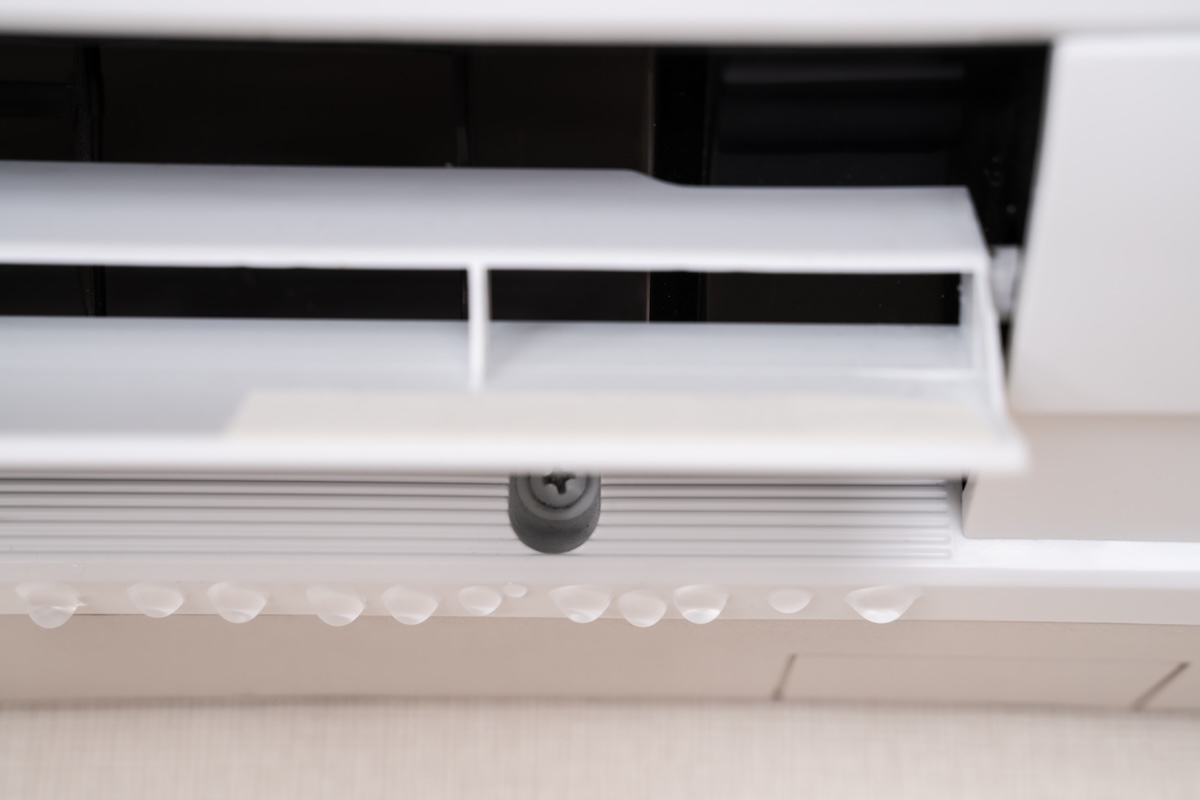
5 Reasons AC Leaking Water (Quick Fixes)
When you notice water pooling around your air conditioning unit, it’s more than just an annoying mess—it might be a sign of a bigger problem. Understanding why your AC is leaking water and knowing quick fixes can save you time, money, and headaches.
Below, we’ll cover:
- Prevent water leaks with regular AC maintenance
- 5 reasons why your AC leaking water (quick fixes)
- Is Your AC Leaking Inside or Outside?
- When it’s time to call an expert
Prevent Water Leaks with Regular AC Maintenance
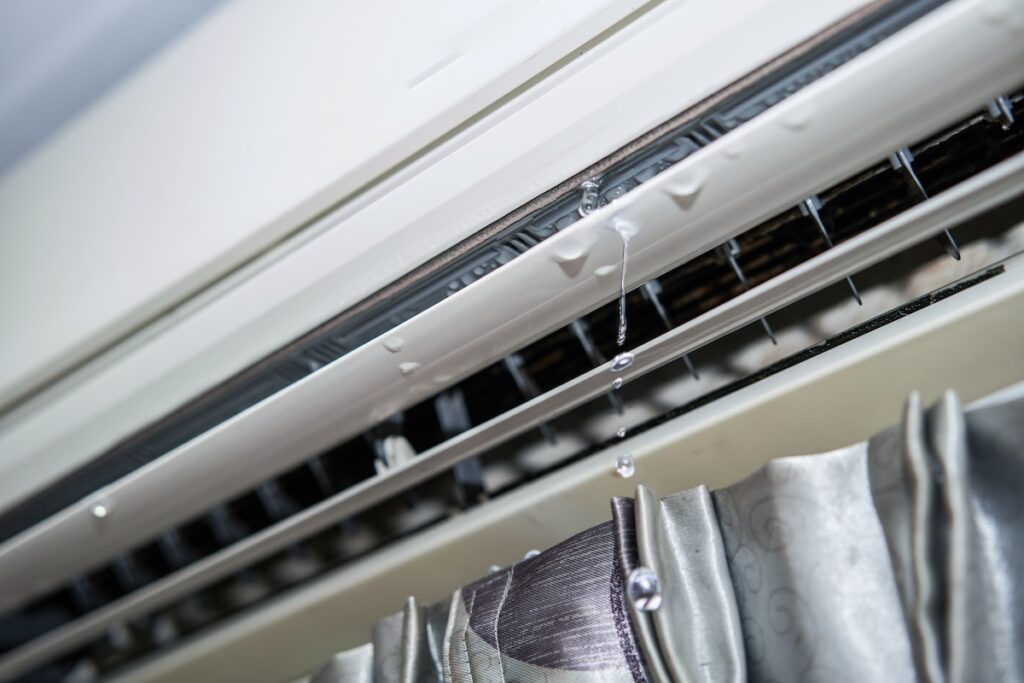
The good news is that many water leaks are preventable with proper maintenance. Here’s how you can keep your AC in top condition and avoid costly repairs:
- Clean or Replace Your Air Filter Regularly
- A clean filter prevents leaks and improves system efficiency and indoor air quality.
- Check your filter every 1-3 months and replace if necessary.
- Inspect the Condensate Drain Line
- Regularly check the drain line for blockages.
- Pour a cup of vinegar down the line every few months to prevent clogs.
- Schedule Annual AC Tune-Ups
- Professional maintenance includes inspecting key components like evaporator coils, refrigerant levels, and the drainage system.
- Ensures your AC runs efficiently during peak cooling months.
5 Reasons Why Your AC Is Leaking Water (Quick Fixes)
There are a variety of reasons your air conditioner might be leaking water. Below, we’ll break these down into smaller, more manageable issues and include quick fixes where possible:
1. Clogged Condensate Drain Line
One of the most common reasons for AC water leaks is a clogged condensate drain line. This drain line is designed to carry away the water that your air conditioner collects as it cools the air. However, over time, dirt, debris, and mold can build up inside the line, leading to blockages. When this happens, water cannot flow out properly and ends up backing into your unit, potentially causing damage.
- Quick Fix: Start by flushing the drain line with a mixture of water and vinegar to break down minor clogs. If the clog persists, try using a wet/dry vacuum to suck out the blockage. Be careful not to damage the line in the process. For severe clogs, you may need to call a professional HVAC technician.
2. Dirty Air Filter
Dirty or clogged air filters are another frequent cause of water leakage in AC units. When the filter becomes clogged with dust and debris, it restricts airflow, which in turn can cause the evaporator coils to freeze. As the frozen coils thaw, excess water can overflow into areas where it shouldn’t be.
- Quick Fix: To prevent this, make it a habit to replace or clean your air filter every 1 to 3 months, depending on how heavily you use your AC and the air quality in your home. Regular maintenance of the filters not only prevents leaks but also improves the efficiency and lifespan of your unit.
3. Low Refrigerant Levels
Low refrigerant levels create an imbalance in your AC system, causing pressure to drop. This often leads to the evaporator coils freezing over. When the ice on the coils eventually melts, the excess water has to go somewhere, and it often ends up leaking out of the unit.
- Quick Fix: Unfortunately, low refrigerant levels are not something you can fix yourself. Leaks in the refrigerant system must be identified and repaired by a licensed HVAC technician. Once the repair is complete, the system can be recharged with the correct amount of refrigerant to restore normal operation.
4. Broken Condensate Pump
For AC systems that rely on a condensate pump to move water out of the unit, a malfunctioning pump can cause water to pool and leak. This is particularly common in systems installed in basements or other areas where gravity alone isn’t enough to remove the water.
- Quick Fix: Check to make sure the condensate pump is functioning properly. If it’s not, inspect it for blockages or damage. In many cases, a broken pump will need to be replaced by a professional technician, as this ensures the repair is done safely and correctly.
5. Improper Installation
Improper installation is a less common but still significant reason for water leakage, especially if your AC is new. If the unit wasn’t installed level, the drainage system may not function as it should, causing water to collect and leak out. Incorrect installation of components like the drain pan or lines can also lead to problems.
- Quick Fix: Use a level tool to check if your unit is properly balanced. If it’s not, adjust the positioning or enlist the help of the original installer to correct the issue. A professional can ensure that all components are installed correctly, preventing future problems.
Is Your AC Leaking Inside or Outside? How to Tell the Difference
Not every puddle near your air conditioner signals a problem. Before worrying, the first step is identifying where the water is actually coming from, because the location of the leak tells you almost everything about the cause and how urgent the fix really is.
If your AC is leaking water indoors, that is always worth investigating promptly. Indoor leaks typically originate from a clogged condensate drain line, an overflowing drain pan, frozen evaporator coils, or low refrigerant levels. Left unaddressed, an indoor leak can damage flooring, drywall, and ceilings, and create the humid conditions that mold needs to take hold, a particularly serious concern in Florida homes where indoor moisture levels are already elevated year-round.
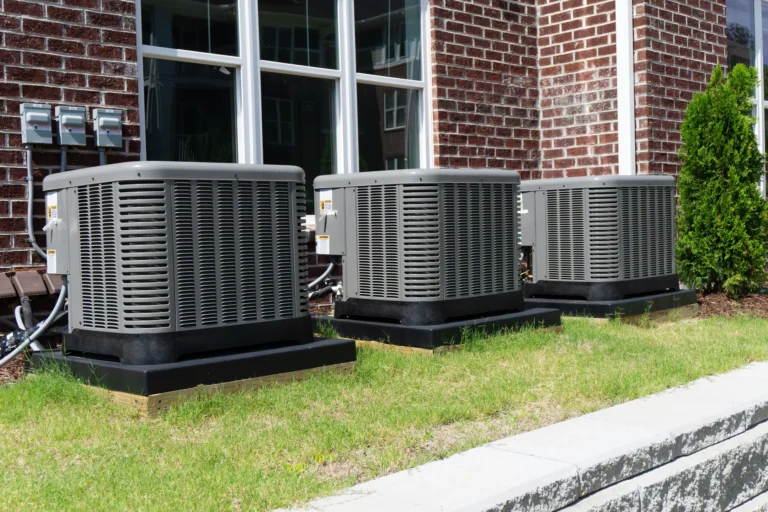
If your AC appears to be leaking water outdoors, there is a good chance nothing is wrong at all. On hot, humid Florida days, it is completely normal to see condensation dripping from the outdoor condenser unit or a small puddle forming near the drain pipe exit point. This is simply your system doing its job — removing moisture from your indoor air and expelling it outside. As a general rule: a small, clear drip near the outdoor drain pipe on a hot day is normal. A steady stream, a large puddle, or any water appearing in unexpected locations outdoors warrants a closer look.
A quick self-diagnosis guide:
| What You See | Where | Likely Meaning |
|---|---|---|
| Small drip near drain pipe | Outdoors | Normal condensation — no action needed |
| Large puddle under outdoor unit | Outdoors | Possible drain blockage or refrigerant issue |
| Water pooling around indoor air handler | Indoors | Clogged drain line or overflowing drain pan |
| Water stains on walls or ceiling near vents | Indoors | Duct condensation or insulation issue |
| Ice forming then dripping from indoor unit | Indoors | Frozen coils — turn system off immediately |
If you are seeing any of the indoor scenarios above and basic troubleshooting has not resolved the issue, the safest next step is always a professional inspection before the damage spreads.
Living in Florida? Don’t Wait on an AC Leak.
Florida’s combination of intense heat and near-constant humidity means your air conditioner runs harder and longer than systems in almost any other state, and that means drain lines clog faster, drain pans fill quicker, and small leaks escalate into bigger problems sooner than you might expect.
If your AC is leaking water inside your home, every hour counts. Water damage, mold growth, and system failure don’t wait for a convenient repair window.
Bob’s Air Conditioning offers same-day AC repair across Florida. Our certified technicians will diagnose the source of your leak fast and get your system back to full operation, before the Florida heat makes it worse.
📞 Call Bob’s AC now for same-day service
Signs You Need Professional Assistance
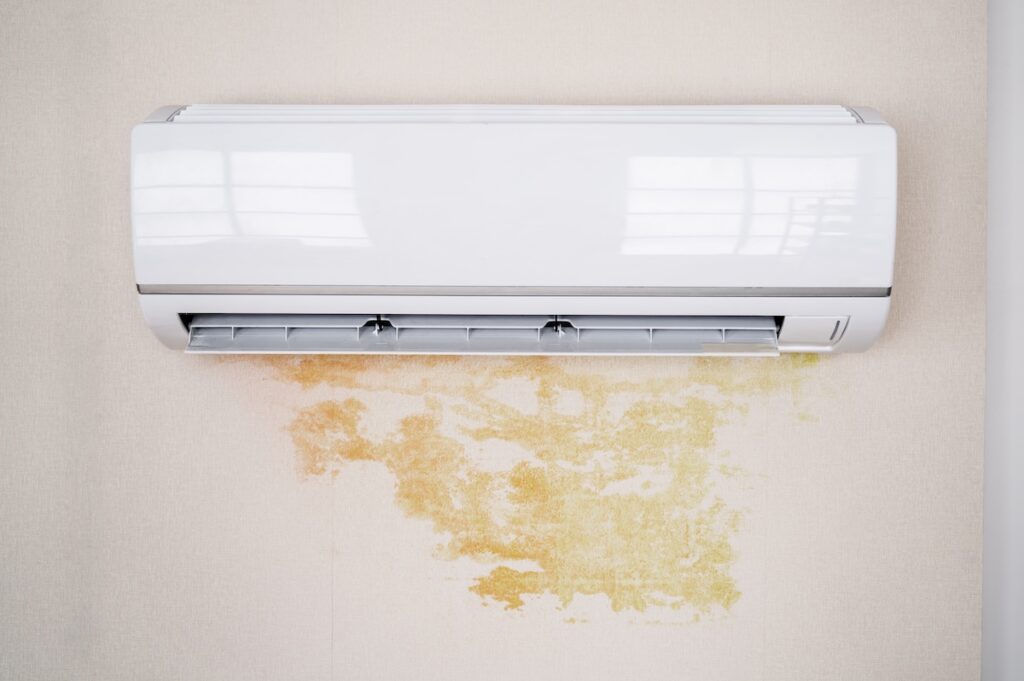
Sometimes, AC leaks require more than quick fixes. Here are signs it’s time to call the experts:
Your AC continues to leak after basic troubleshooting
If you’ve tried basic troubleshooting steps like tightening connections or clearing the drain line and your AC still leaks, it could be a sign of a larger issue. Problems such as a damaged condensate pan or a clogged drain line might require professional attention to prevent further damage.
You notice unusual noises or reduced cooling efficiency
Strange sounds like banging, grinding, or whistling coming from your AC are often indicators of mechanical issues. Additionally, if your AC isn’t cooling as effectively as it used to, it might be struggling due to problems with the compressor, low refrigerant levels, or dirty filters.
The unit shuts down or cycles on and off erratically
When your AC turns on and off unpredictably or shuts down completely, it could signal an electrical issue, a failing thermostat, or an overheating system. This kind of irregular behavior needs immediate inspection to avoid potential system failure.
AC Leaking Water: Causes & Fixes
If your AC is leaking water, don’t wait to address the issue—trust the experts at Bob’s Air Conditioning to get the job done right. With over 40 years of experience, a commitment to quality service, and fast response times, we’re the team homeowners rely on for all their HVAC needs.
Whether it’s a minor fix or a complex repair, we have the skills and expertise to keep your system running smoothly. Ready to get started? Contact Bob’s Air Conditioning today and take advantage of our $104.95 service diagnostic offer!
Ultimate Comfort Awaits